Updated: March 2025
Effective capacity planning is a cornerstone of strategic estate management for schools and trusts. It determines how many pupils a school can accommodate and ensures that resources are used efficiently. Without proper planning, schools risk overcrowding, inefficient space utilisation, rising maintenance costs, and unnecessary capital expenditure.
With billions invested in creating additional pupil places over the past decade, capacity planning has become a national priority. However, at the individual school or trust level, the application of this crucial process is often inconsistent or overlooked. Schools and trusts must take a proactive approach to capacity planning to ensure they can meet the needs of their students while making the best use of their estates.
The Importance of Capacity Planning
Capacity planning involves assessing available space, resources, and timetable structures to determine how many students a school can support. Having accurate capacity data allows schools to operate more effectively, secure funding, and prepare for future growth. Without a clear strategy, schools may be forced into rushed decisions that could negatively impact students and staff.
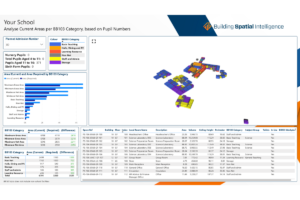
A key tool for assessing pupil capacity is Building Bulletin 103 (BB103), which provides area guidelines for mainstream schools. By following BB103 standards, schools can evaluate whether their facilities align with recommended space allocations for different types of learning environments. This ensures that classrooms, specialist teaching areas, and support spaces are appropriately sized to meet the needs of students. Our dashboards incorporate BB103 guidelines to provide a clear visual representation of a school’s capacity, helping estate managers and leadership teams make informed decisions.
Who Is Responsible for Capacity Planning?
Strategising capacity isn’t a one-size-fits-all process; responsibilities and decision-making vary depending on the structure of the school or trust. While some schools rely on Local Authorities for guidance, others take a more hands-on approach, particularly within Multi-Academy Trusts (MATs). Understanding who plays a role in capacity planning and how decisions are made is crucial for ensuring that school estates are managed strategically and efficiently.
The Role of Local Authorities
Local Authorities (LAs) are responsible for commissioning school places and ensuring sufficient capacity across their regions. Their primary tool for assessing capacity is the Net Capacity Assessment, an older methodology that, despite its age, remains a key planning tool. LAs use these calculations to evaluate school occupancy rates and identify areas where additional places may be needed. However, inconsistencies in how schools report available places can make accurate planning difficult.
Capacity Planning in Schools
Individual schools must also consider capacity when planning for student intake and curriculum delivery. However, many schools rely on Local Authorities for demographic projections and fail to actively engage in long-term capacity planning. Primary schools typically estimate capacity based on class sizes, while secondary schools must account for complex timetables, subject choices, and Special Educational Needs (SEN) requirements.
Poor capacity planning can lead to significant issues. For example, some schools raise substantial funds for expansion projects that are later deemed unnecessary, while others struggle with inadequate specialist facilities, forcing students into unsuitable learning environments. In some cases, high-achieving but overcrowded schools may even disadvantage themselves in funding bids by appearing too successful to warrant expansion grants.
How MATs Can Take Control of Capacity Planning
MATs are becoming key players in estate management. As landlords of school buildings and overseers of capital projects, MATs have the potential to centralise capacity planning and ensure equitable resource distribution. However, many MATs still don’t prioritise capacity management. In some cases, trusts unknowingly maintain and heat buildings with significant surplus capacity, wasting valuable resources.
A well-managed MAT estate should take a strategic approach to capacity planning, working with individual schools and Local Authorities to ensure that expansion plans align with long-term needs and financial sustainability.

How Our Services Support Capacity Planning
We provide comprehensive Net Capacity Assessments and School Capacity Reports to help schools and trusts make informed decisions about their estates. Our reports offer:
- Accurate capacity data to support funding applications and estate planning.
- Strategic insights into space utilisation, helping schools optimise their facilities.
- Objective evidence to inform decisions about expansion, refurbishment, or downsizing.
- Transparency in resource allocation within MATs, ensuring fair distribution of capital funding.
Capacity planning is a fundamental part of strategic estate management. Whether you are a headteacher, an estates manager, or part of a MAT leadership team, having clear, data-driven insights into your school’s capacity can prevent costly mistakes and support long-term planning.
To learn more about our School Capacity Reports and how we can assist with your capacity planning needs, contact us today. You can also download a FREE Capacity Report sample to discover more about the insights we offer.