Sustainability has become a core expectation for responsible school estate management, highlighted recently by the DfE’s 2025 School Estate Management Standards (SEMS). Now, schools and trusts are expected not just to maintain buildings, but to actively monitor energy use, reduce carbon emissions, and embed environmental performance into every estate decision. Achieving this requires a strategic approach that aligns sustainability with long-term asset management, capital investment, and day-to-day operational planning.
For estates managers, this represents both a challenge and an opportunity. Integrating environmental performance into planning, procurement, and project delivery can provide cost savings, improve building efficiency, and ensure estates are compliant with SEMS Level 3 and beyond, while contributing to national net zero goals.
With over 20 years in the industry, we’ve worked through the changing landscape of school estates, seen what works, and know what it takes to go beyond compliance to deliver truly sustainable, future-ready schools.
Why Sustainability Matters in School Estates
Sustainability in school estates is driven by environmental ambition, regulation, cost pressures, and the need for long-term resilience. For example, energy bills are rising sharply, many school buildings are decades old, and budgets for maintenance and upgrades are tight. Estates managers are expected to do more with less, while keeping buildings safe, comfortable, and compliant. The DfE’s SEMS makes it clear that sustainability is central to delivering value for money and protecting buildings for future generations.
In practical terms, this means taking actions that directly reduce energy use and carbon emissions. For example:
- Improving building fabric – Upgrading insulation, replacing single-glazed windows, or sealing draughty doors can significantly reduce heating and cooling demand.
- Better controls and building management systems – Installing programmable heating and lighting controls, or using occupancy sensors, helps ensure energy is only used when and where it’s needed.
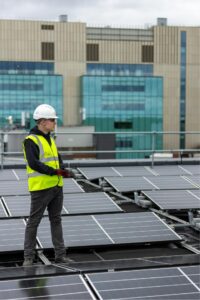
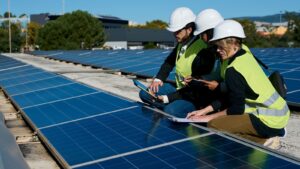
- Low-carbon interventions – Adding LED lighting, energy-efficient boilers, or renewable energy systems like solar panels lowers operational carbon.
- Considering embodied carbon – Choosing low-impact materials, reusing existing fittings, or prioritising retrofit over new build helps reduce the environmental footprint of construction and refurbishment.
These practical measures make estates more efficient, more comfortable for staff and pupils, and less expensive to operate. They also help schools meet SEMS Level 3 expectations by embedding environmental performance into day-to-day decision-making, rather than treating sustainability as an optional extra.
What the DfE Expects
The DfE’s SEMS sets clear expectations for sustainability, particularly for schools and trusts working towards Level 3 and Level 4. Sustainability is expected to influence estate planning, investment decisions, and the management of buildings across their lifecycle.
SEMS Sustainability: Level 1
Schools at Level 1 are at the starting point of their sustainability journey. The focus is on awareness and basic compliance: understanding energy use, identifying obvious inefficiencies, and beginning to collect key data. Estates managers may start with simple actions such as checking boiler settings, ensuring lights and heating are turned off when not in use, and recording energy consumption to begin building a picture of the estate’s performance. Level 1 is about laying the groundwork and understanding where improvements are needed.
SEMS Sustainability: Level 2
Level 2 is about taking structured, proactive steps. Schools at this level are expected to have an estate plan that includes energy monitoring, basic carbon awareness, and prioritisation of simple efficiency measures. Estates teams may implement small-scale interventions like upgrading lighting to LEDs, optimising heating schedules, or improving insulation in key areas. Level 2 also involves starting to integrate sustainability into capital decisions, preparing the school to progress towards Level 3 where more strategic planning and measurable targets are required.
SEMS Sustainability: Level 3
Responsible bodies should take measurable, proactive action:
- Monitor and analyse energy consumption across the estate to identify inefficiencies.
- Integrate carbon and environmental impact into estate planning and capital investment decisions, ensuring sustainability sits alongside cost, condition, and risk.
- Prioritise retrofit, energy efficiency, and low-carbon interventions over new build where appropriate.
- Develop plans to reduce both operational and embodied carbon.
- Set clear targets for energy reduction and carbon emissions, aligned with national net zero objectives.
SEMS Sustainability: Level 4
Schools and trusts are expected to demonstrate sector-leading practice. Sustainability must inform all estate decisions, innovation is encouraged, and learning is shared to support improvement across the sector. Environmental performance becomes a defining characteristic of a well-managed, future-ready estate.
Making Sustainability Work in Your Estate
Delivering on SEMS sustainability requirements requires a structured approach embedded into everyday estate management. Estates teams need clear visibility of building performance and a robust framework for turning insight into action.
Key principles include:
- Build sustainability into estate planning
Energy performance and carbon impact should sit alongside condition, suitability, and risk within estate plans. Regular monitoring of energy consumption allows inefficiencies to be identified, supporting evidence-led prioritisation of investment. - Use data to target interventions
Knowing where and when energy is used enables estates managers to focus effort where it will have the greatest impact. Reliable data underpins confident decisions and demonstrates progress against sustainability targets. - Prioritise fabric-first retrofit
Improvements to insulation, glazing, and air tightness reduce energy demand at source, delivering long-term operational savings and improved comfort for pupils and staff. These measures create a strong foundation for further low-carbon interventions. - Address operational and embodied carbon together
Lifecycle planning, material selection, and reuse strategies reduce environmental impact while extending the life of existing assets.
Applied consistently, these principles make sustainability a practical, manageable part of effective estate management and fully aligned with SEMS Level 3 expectations.

How Technology and Digitisation Can Help Schools Go Greener
Technology isn’t just a buzzword, it’s how estates teams turn sustainability from aspiration into action. The minimum viable dataset for schools provides the foundation for a digitised estate, giving estates managers a clear starting point for understanding energy use, carbon emissions, and identifying priority areas for improvement.
- Smarter energy and environment insight– IoT sensors and integrated dashboards monitor energy use, heat resilience, and environmental conditions in real time, helping spot inefficiencies and sub-optimal learning environments quickly.
- A single source of truth– Unified and centralised datasets replace scattered spreadsheets and paper plans, improving decision-making and making retrofit and low-carbon interventions easier to prioritise.
- Climate resilience planning– Digital mapping, integrated datasets, and digital twins highlight flood risk, heat stress zones, and other climate vulnerabilities, allowing action before problems arise.
Digitisation isn’t an add-on, it’s the foundation for sustainability. It saves time, justifies investment with evidence, and supports SEMS compliance while building resilience across the estate.
How Building Spatial Intelligence Can Help
With over 20 years’ experience, we know our clients well, and they’re not alone in navigating SEMS sustainability requirements. Our centralised datasets provide a minimum viable dataset for school for energy and carbon, giving estates managers a clear view of where improvements will have the greatest impact. Combined with IoT monitoring and data-driven analytics, this data turns complex information into actionable insight. Sustainability becomes measurable, manageable, and embedded into every estate decision, helping teams achieve Level 3, improve efficiency, enhance comfort, and build long-term resilience. We like to think of it as sustainability without the guesswork or the spreadsheets stacked to the ceiling!
Sustainability is central to SEMS compliance, and estates managers can lead the way. Embedding environmental performance into every decision and leveraging datasets, IoT, and expert insight, turns targets into tangible progress, saves money, and future-proofs your estate. Start making your sustainability goals a reality today – book a consultation to discover the difference we can make to your estate.