Rising temperatures and more frequent heatwaves are no longer distant concerns; they’re already affecting classrooms, playgrounds, and long-term maintenance budgets. For school leaders and estate managers, the question is no longer if they need to adapt, but how.
While much of the focus has been on net-zero carbon targets, climate adaptation, especially heat resilience, is now critical to safeguarding learning environments and managing estate risk. But tackling this challenge effectively requires more than short-term fixes or isolated upgrades. It demands a clear understanding of how buildings and outdoor spaces respond to heat, and how to plan improvements that are both strategic and sustainable.
This is where digitised estates come in. By centralising spatial data, floor plans, asset logs, condition reports, and performance metrics, schools and trusts can make evidence-based decisions about how best to prepare for a hotter, more unpredictable future.
Why Climate Adaptation Matters for Schools
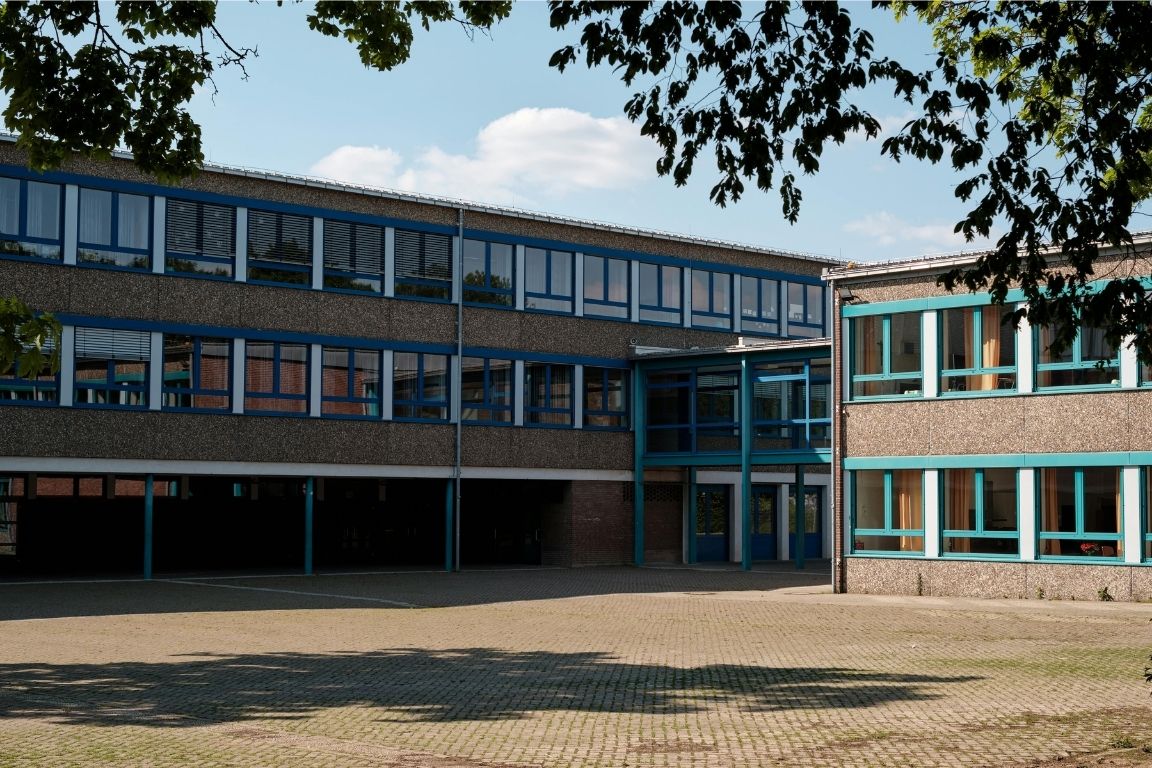
The UK’s education estate was largely built for a different climate. As summers become hotter and heatwaves more intense, many school buildings are simply not equipped to keep indoor environments safe, comfortable, or conducive to learning.
The impact is already being felt. Nearly 200 schools closed or reduced hours during the July 2022 “red” heat alert, despite government advice to remain open.
- In Oxfordshire, 25 schools were partially or fully closed over two days due to extreme heat.
- Oasis Trust shut 3 academies when classroom temperatures hit 42 °C.
- Hereford Academy shortened the school day to 08:30–14:00 as a precaution.
- Schools across London dismissed pupils early, citing safeguarding concerns over intolerable indoor temperatures.
These are not isolated cases; they are early indicators of systemic risk. Rising temperatures disrupt attendance, limit teaching hours, and increase pressure on facilities that are already ageing and overstretched. For multi-academy trusts, this translates into operational, financial, and reputational challenges.
Without strategic adaptation, these problems will only intensify. That’s why forward-thinking estate planning, backed by accurate data, is essential, not just to protect buildings, but to protect the learning that happens inside them.
From a strategic perspective, the impacts of extreme heat are felt across multiple priorities:
- Safeguarding – High internal temperatures can compromise pupil health and staff safety.
- Educational outcomes – A US study of 10 million high school students over 13 years found that just 6 school days above 32°C resulted in a 1% reduction in annual learning, with hotter days having even larger impacts.
- Operational costs – Increased use of cooling systems and premature asset failure drive up expenditure.
- Net-zero delivery – Poorly adapted buildings often rely more on carbon-intensive cooling to remain functional.
Without proactive planning, trusts risk compounding maintenance backlogs, increasing insurance liabilities, and facing reactive, high-cost interventions that could have been avoided with better data and foresight.
And it’s not just heatwaves. As the UK’s weather patterns shift, extreme heat is often followed by intense rainfall. Warmer air holds more moisture, so after a prolonged hot spell, the atmosphere becomes primed for heavy downpours, especially when cooler air moves in. The result is flash flooding that can overwhelm school drainage systems, damage assets, and cause closures.
Effective climate adaptation means planning for both extremes and ensuring your estate data supports fast, confident decision-making in the face of increasingly volatile conditions.
What Is a Digitised Estate?

A digitised estate is more than a set of digital floor plans or architectural drawings; it’s a living, data-driven record of how a school or trust’s built environment functions, performs, and evolves over time.
At its core, a digitised estate brings together multiple data sets into a central, accessible system, including:
- Up-to-date CAD floor plans – accurately measured and coded spaces, aligned with BB103 and capacity standards.
- 3D spatial models (BIM) – visualise the estate in three dimensions, enabling smarter planning, scenario testing, and spatial analysis.
- Asset registers – track the condition, location, and lifecycle of key components, from roofing and M&E systems to playground surfacing.
- Integrated dashboards – link data on condition, capacity, usage, and risk into one place, enabling better-informed decisions across the estate.
This approach moves schools away from managing buildings reactively and toward data-led planning. It means that every maintenance decision, capital investment, or adaptation measure is grounded in reliable evidence, not assumptions or outdated records.
In the context of climate adaptation, digitised estates are a critical enabler. They allow trusts to:
- Identify areas most at risk from heat exposure
- Prioritise interventions across multiple sites
- Model the impact of design changes before committing to capital spend
- Track the long-term performance of climate resilience measures
With a digitised estate, climate adaptation becomes not just possible, but measurable, manageable, and scalable across an entire trust.
Using Digitised Estates to Build Heat Resilience

When it comes to preparing schools for a hotter future, digitised estates provide a powerful foundation for informed, targeted action. By integrating spatial, asset, and performance data, school leaders and estate teams can move beyond reactive maintenance and start planning for long-term climate resilience, particularly in relation to heat.
Here’s how a digitised estate supports this process:
A. Identifying Heat-Vulnerable Areas
With accurate digital floor plans and 3D spatial models, schools can pinpoint spaces most exposed to overheating. This includes:
- South, and west-facing classrooms with prolonged sun exposure
- Flat-roofed buildings that absorb and retain heat
- Unshaded outdoor areas such as playgrounds and sports pitches
- Poorly ventilated internal rooms or densely occupied zones like ICT suites
By layering spatial data with environmental factors, such as orientation, surface materials, and occupancy levels, trusts can create heat vulnerability maps across their estate. This visibility helps prioritise where interventions are most urgently needed.
B. Testing Interventions Before You Build
BIM allows schools to explore different heat-resilience strategies in a virtual environment before making physical changes. For example:
- Simulating the impact of external shading, or tree planting
- Comparing material options for roofing or cladding based on thermal performance
- Comparing the heat retention properties of different window options
- Assessing the effectiveness of natural ventilation and mechanical systems
- Forecasting internal temperatures under different occupancy scenarios or seasonal conditions
This data-led approach reduces the risk of investing in ineffective measures and ensures that interventions are proportionate, cost-effective, and aligned with long-term goals. For example, that expensive triple glazing project you’ve been planning might seem like a step toward decarbonisation today. But in ten years, it could be working against you, trapping excess heat and making it even harder to cool classrooms.
Without a clear, climate-informed strategy, well-intentioned upgrades could compromise both staff wellbeing and pupil outcomes.
C. Planning for Lifecycle Impact
Digitised estates link asset condition data with projected performance, helping estate managers plan ahead for the effects of heat over time.
For instance:
- Roofing systems may degrade faster under extreme UV exposure
- External play surfaces can warp, crack, or become unsafe
- Mechanical systems may need earlier replacement due to increased cooling demand
By integrating this information into a central dashboard, trusts can align condition improvement planning, capital bids (e.g. CIF), and sustainability goals; targeting investment where it will have the greatest long-term impact.
Heat resilience is no longer a ‘nice to have’. It’s a necessity for safeguarding learning, protecting assets, and managing long-term risk. But without accurate, centralised data, schools are left guessing where to focus time and funding.
Digitising your estate is the first step to gaining clarity, putting you in control and giving you the confidence to act decisively. It allows you to identify vulnerabilities, model practical solutions, and align investment with both operational needs and climate adaptation goals.
Get in touch with us today and find out how digitisation can help you build resilience, manage assets more effectively, and make smarter, climate-ready decisions across your estate.