Guidance like BB101 (Building Bulletin 101) sets clear expectations for ventilation, thermal comfort, and indoor air quality in schools, but many classrooms exceed these thresholds without teachers or estates teams being aware. Elevated CO₂ levels above 1,500 ppm are consistently linked to reduced concentration, slower decision-making, fatigue, and independent studies show 50% reductions in cognitive performance. Poor temperature control or mismatched room use compounds the problem, making even minor environmental issues measurable barriers to learning. A data-rich, digitised estate changes that by providing a clear picture of how every space is performing. With accurate, accessible data on classroom conditions, leaders and teachers can spot problems early and make informed interventions.
When classrooms meet BB101 standards consistently (comfortable, well-ventilated, and aligned with their purpose), pupils are better able to engage with lessons, retain information, and participate fully. That’s why estate management is increasingly recognised not only as an operational function but as a contributor to educational outcomes.
From Reactive to Strategic: What a Digitised Estate Really Means
Many schools may already hold paper plans, spreadsheets, or condition reports, but that’s reactive, not strategic. A digitised estate starts with the Minimum Viable Dataset, which is the essential information every school estate needs to make confident, evidence-based decisions that lead to improved educational outcomes. This includes:
- Accurate and up-to-date floor plans
- Comprehensive asset registers
- Capacity analysis and accessibility reports
- Financial and operational datasets
The Department for Education’s new Education Estates Strategy clearly signals that data and digital transformation are now foundational to how estates are managed and funded, making reliable, timely data a quickly emerging necessity for responsible bodies looking to access capital.
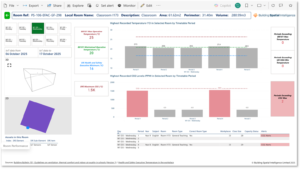
Once the dataset foundation is in place, smart IoT sensors snap into it and bring this digital picture to life with live data on CO₂, temperature, humidity, and occupancy. Those real-time insights show not just what’s in your buildings, but how they’re performing against expectations, letting teachers act immediately, estates teams intervene early, and leaders make strategic decisions that improve conditions, drive compliance with standards like BB101, and strengthen funding bids.

Why Environment Matters for Health and Learning
We all know classrooms can feel stuffy by mid-morning, especially during winter when windows can’t be opened as regularly due to the weather. Research shows indoor air quality has real consequences for health, comfort, and student performance, which is a concern when you consider that over 90% of classrooms regularly exceed CO2 thresholds. Alongside this, high CO₂ is linked with fatigue, headaches and reduced cognitive function.
BB101 makes clear that adequate ventilation and indoor air quality are not optional, and it provides practical daily CO₂ benchmarks for classrooms. IoT monitoring lets you see whether your spaces meet those expectations every day, not just on paper.
While the science continues to evolve, studies make clear that classrooms with excessive CO₂ and poor air quality are environments where pupils struggle to focus and engage. Analyses that pair exposure and outcome data show that lower CO₂ concentrations correlate with higher scores on cognitive tests, even when accounting for other variables.
The result for schools? Poor air quality doesn’t just make rooms uncomfortable. It can reduce attention, memory and learning performance; outcomes schools track every day but may not realise are shaped by the classroom environment.
IoT Makes the Invisible Visible
Environmental IoT sensors give you continuous, room-by-room insight into factors that matter:
- CO₂ levels – indicating ventilation quality and how well fresh air circulates.
- Temperature – identifying overheating or under-heating that affects comfort.
- Humidity and air quality – helping manage conditions that influence sickness and focus.
Instead of hearing about problems only once they’ve become complaints, you can see patterns every day. For example, if CO₂ regularly spikes in a particular classroom at 10:30am, you know the space needs better ventilation or different scheduling. If humidity swings wildly, you can intervene before attendance or comfort suffers. These aren’t abstract numbers, they’re actionable facts that let you act before learning is disrupted.
Transforming School Buildings Into Learning-Ready Environments
Managing a school estate can feel complex, but you don’t have to navigate it alone. Building Spatial Intelligence helps you turn existing information into clear, actionable insights, from your first digitised plan to real-time classroom data. With a clear view of how each space performs, you can tackle environmental issues early, improve comfort, and create classrooms where students can focus and succeed. This isn’t just about buildings—it’s about measurable improvements in learning outcomes.
If you’re ready to see what that could look like across your estate, book a free consultation with our team, and we’ll help you identify practical first steps tailored to your schools.